
Each Year of Cognac Aging Brings Flavour Dimensions
There is something unusual about cognac aging. The same liquid, placed in the same wooden environment, refuses to remain the same over time. It does not simply become smoother or softer. It evolves into something structurally different something that seems to carry memory inside flavour.
At first, it is difficult to believe that time alone can reshape aroma so deeply. Yet inside oak barrels, transformation is not symbolic. It is chemical, slow, and continuous. What begins as a sharp and unrefined spirit gradually turns into a layered composition where every year adds a new sensory dimension.
This is where the idea of hidden flavour dimensions begins to matter. They do not appear instantly. They unfold quietly, one stage at a time, as if the liquid is learning how to express itself through time.
Before Cognac Aging Begins
Before any aging begins, the liquid exists in a raw form known as eau-de-vie. It is clear, direct, and intense. The structure is there, but the balance is not.
At this stage, the spirit feels almost unfinished:
- Fruit notes are sharp and unrounded
- Alcohol presence feels direct and energetic
- Aroma exists, but without depth or layering
This is the starting point of transformation. Nothing is stable yet. Everything is waiting to be shaped.
Even within cognac production, this stage is treated as potential rather than identity. The real character is still ahead, locked inside time.
The First Encounter with Wood
The moment the spirit enters oak barrels, everything changes direction. The barrel is not a container it behaves more like a slow-reacting environment.
Most of this transformation happens inside French oak barrels, where structure and porosity allow gradual exchange between wood and spirit.
Something subtle begins immediately:
- The sharp edges of alcohol start to soften
- Wood begins releasing hidden aromatic compounds
- Oxygen slowly interacts through the barrel walls
At this stage, transformation is not obvious. It is almost invisible. Yet inside the barrel, chemistry has already started rewriting the profile.
Early Cognac Aging (Years 1–3)
The first years of aging feel like two identities learning to coexist the raw spirit and the influence of wood.
The result is not harmony yet. It is adjustment.
Inside the barrel:
- Vanilla traces begin to appear
- Light spice starts forming in the background
- Colour shifts gently toward gold
But there is still tension in the structure. The spirit has not fully accepted its new environment. It is in transition.
This stage is where the foundation of an aged cognac profile quietly begins to form, even though it is not yet recognizable as mature character.
Mid Cognac Aging (Years 4–8)
Something important happens when aging continues beyond the early phase. The spirit stops resisting change and begins to organize it.
This is where clarity turns into structure.
At this point:
- Fruit notes deepen into dried expressions
- Aromas begin to feel layered instead of isolated
- Texture becomes noticeably smoother
- Complexity begins to feel intentional rather than accidental
This is also where delicate floral notes cognac characteristics may appear, softening the overall profile and adding quiet aromatic lift.
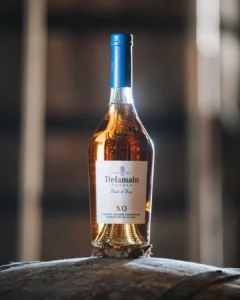
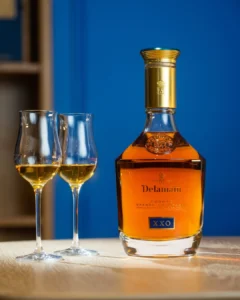
The experience is no longer about transformation alone. It becomes about balance forming between elements that were once separate. Expressions such as Delamain Pale and Dry Xo Grande Champagne Cognac often reflect this stage of harmony, where structure feels refined yet still vibrant.
Deeper Cognac Aging (Years 9–15)
As time continues, the changes become less visible but more profound. The spirit is no longer just interacting with wood. It is evolving internally.
This phase introduces depth that feels almost architectural:
- Leather-like undertones begin emerging
- Tobacco and dark cocoa notes appear
- Spice becomes more structured and less sharp
- Aroma begins to feel multi-layered
At this stage, tasting is no longer linear. It feels like moving through layers that reveal themselves gradually.
The cognac blending process becomes increasingly important here, as different aged components are carefully combined to preserve balance while enhancing depth.
Extended Cognac Aging (Years 16–25)
After a certain point, aging is no longer about adding flavour. It becomes about refining structure until it feels seamless.
The profile shifts again:
- Earthy, truffle-like tones emerge
- Nutty richness becomes more pronounced
- Dried fruit intensifies but feels controlled
- Wood influence integrates instead of standing apart
Everything starts to feel unified.
This is also where distinctions in VS VSOP XO differences become clearer. The gap is no longer just age it is structural complexity and depth perception.
The liquid no longer feels like a combination of notes. It feels like a single evolving system.
Very Long Cognac Aging (25+ Years)
Beyond twenty-five years, changes become extremely subtle. Yet they are also the most refined.
At this stage:
- Old wood impressions become more expressive
- Candied citrus notes appear in faint layers
- Spice turns into soft echoes rather than sharp presence
- The finish becomes long, shifting, and evolving
The most interesting part is not what is present but how it changes after it reaches the palate. The experience does not end quickly. It continues unfolding.
Long-aged expressions like Delamain Xxo Grande Champagne Cognac illustrate this stage, where maturity reveals a deeply integrated and layered profile.
Time stops being a background factor and becomes part of the texture itself.
What Is Really Happening During Cognac Aging
Behind the sensory experience, several slow chemical processes are continuously shaping transformation:
- Oxygen slowly modifies aromatic compounds
- Alcohol gradually evaporates, concentrating structure
- Wood compounds dissolve into the spirit
- New esters form and redefine aroma layers
These changes are not dramatic in isolation. Their impact comes from accumulation over time.
This is why cognac aging cannot be rushed. The system depends entirely on slow interaction.
Cognac Aging as a Layered Experience, not a Linear One
One of the most misunderstood aspects of aging is assuming it works in a straight line.
In reality, it behaves more like layering:
- Early layers never disappear
- Mid layers build on top
- Deep layers integrate without replacing earlier ones
This is why aged cognac feels multidimensional. It is not a single flavour it is a structure of many stages existing together.
Why No Two Aging Experiences Are Ever Identical
Even under controlled conditions, no two barrels evolve in exactly the same way.
Small variations create large differences over time:
- Wood grain differences
- Barrel history
- Cellar humidity shifts
- Natural evaporation rates
These variables ensure that every aging path develops its own identity.
Even when spirits share similar starting points, time separates them into unique expressions.
Cognac Aging and the Role of Blending in Final Structure
At a certain stage, individual barrels are no longer treated as isolated outcomes. They become part of a larger composition.
This is where the cognac blending process becomes essential.
Blending allows:
- Balance between different aging stages
- Adjustment of aromatic intensity
- Refinement of structural harmony
- Integration of complexity into a single profile
Rather than hiding differences, blending organizes them into coherence.
How Cognac Aging Changes the Way Flavour Is Perceived
One of the most subtle effects of aging is not in the liquid but in perception itself.
Younger expressions feel:
- Direct
- Immediate
- Easy to interpret
Older expressions feel:
- Layered
- Gradual
- Continuously revealing
The experience shifts from recognition to exploration. Flavour becomes something that unfolds instead of something that appears instantly.
Conclusion
Cognac aging is not a process that rushes toward improvement. It is a slow construction of structure through time, wood, and controlled environment.
Each year does not just add flavour. It reshapes how flavour exists. What begins as a raw spirit becomes a layered system of evolving dimensions each one built quietly over time, without interruption.
Every aged spirit carries a story shaped by time, wood, and environment. Solis Group engages with industry stakeholders who value this depth and want to strengthen understanding of aged spirits at a global level.
Collaboration in this space is not about selling it is about elevating appreciation and expanding shared expertise.
In the end, what you experience is not just aging. It is time made visible through taste.
FAQs
What happens during cognac aging?
Cognac aging is a slow interaction between spirit, oak, and oxygen inside barrels.
It gradually transforms raw distillate into layered aroma, texture, and structure.
Why is oak important in cognac aging?
Oak acts as an active medium that releases compounds like vanilla and spice over time.
It also allows controlled oxygen exposure, shaping depth and smoothness.
How does cognac age change flavour over time?
Flavour evolves from sharp fruit notes to structured layers of dried fruit, wood, and spice.
Each year adds complexity rather than simply intensifying taste.
What is the role of oxidation in cognac aging?
Oxidation slowly modifies aromatic compounds inside the barrel environment. This process creates deeper, rounder, and more integrated flavour structures.
Why does aged cognac taste more complex?
Long aging allows multiple chemical reactions to build overlapping flavour layers. These layers unfold gradually, creating depth instead of single-note taste.
How do barrels influence cognac aging results?
Each barrel has unique wood density, history, and permeability. These factors create variation in aroma, structure, and aging speed.
What makes older cognac different from younger ones?
Older cognac develops tertiary notes like leather, nut, and earthy tones. Younger expressions remain brighter, sharper, and more direct.
Does cognac aging stop changing after many years?
No, even long-aged cognac continues evolving slowly inside the barrel. Changes become subtle but still affect aroma and finish depth.
-
 Craft Beer and Regular Beer gap Starts with Brewing Intent
 -
Rare Cellars Hide Grande Champagne Cognac Stories
-
Light and Full-Bodied Sparkling Wines Bring Two Taste Layers
-
Maceration Time impacts Flavour in Pink Gin Styles
-
Rare Vintage Port Wine Peak Expression of Douro Vineyards
-
Vodka and Wine showed Two Worlds of Aroma
-
Whiskey Colour Spectrum from Pale Gold to Ebony Depths
-
Gewurztraminer White Wine Reveals Floral Spice Magic
-
Pinot Noir and Merlot aroma notes mapped to clear flavours
-
Vermouth styles broken down by taste impact not wine Language
-
Christmas Cocktails You Can Make at Home
-
Sound Of Christmas Wine And Cheese?
-
A Fresh Take on New Year’s Resolutions
-
The Art of Smelling Wine Like a True Connoisseur
-
Looking for the Best Wine? Here's Where to Find It!
-
Read This Before You Buy Your Dad a Whisky.
-
Whiskey on the Rocks — Cool Choice or Flavor Mistake?
-
The Art of Pairing Wine with Indian Food
-
The Ingredients & Botanicals That Define Gin
-
Seven Days of Love — Wine for Valentine’s Week

-
Light and Full-Bodied Sparkling Wines Bring Two Taste Layers
-
Maceration Time impacts Flavour in Pink Gin Styles
-
Rare Vintage Port Wine Peak Expression of Douro Vineyards
-
Vodka and Wine showed Two Worlds of Aroma
-
Whiskey Colour Spectrum from Pale Gold to Ebony Depths
-
Gewurztraminer White Wine Reveals Floral Spice Magic
-
Pinot Noir and Merlot aroma notes mapped to clear flavours
-
Vermouth styles broken down by taste impact not wine Language
-
Gin ABV Clarity Leads to More Confident Gin Selection
-
Vodka Flavour Builds Its Identity by overpowering Notes